




Yangminxing Wu, Yangminyan Wu
Before teenagers begin studying investments, taxation, or retirement planning, Diana believes they should learn to answer one practical question: Where does their money go?
In an interview with Youth of We Chinese Americans magazine, Diana discussed the financial knowledge young people need, the emotions behind spending decisions, and ways to make financial education more accessible. Drawing on her involvement with the Society for Financial Awareness (SOFA), she also shared advice for students working to bring financial education into their communities.
Born and raised in San Diego, Diana now lives in Ramona. She described her volunteer involvement with the Chamber of Commerce, Pop Warner, and SOFA. As a mother of four children, including three teenagers involved in sports, she is familiar with the busy schedules that financial education must fit into.
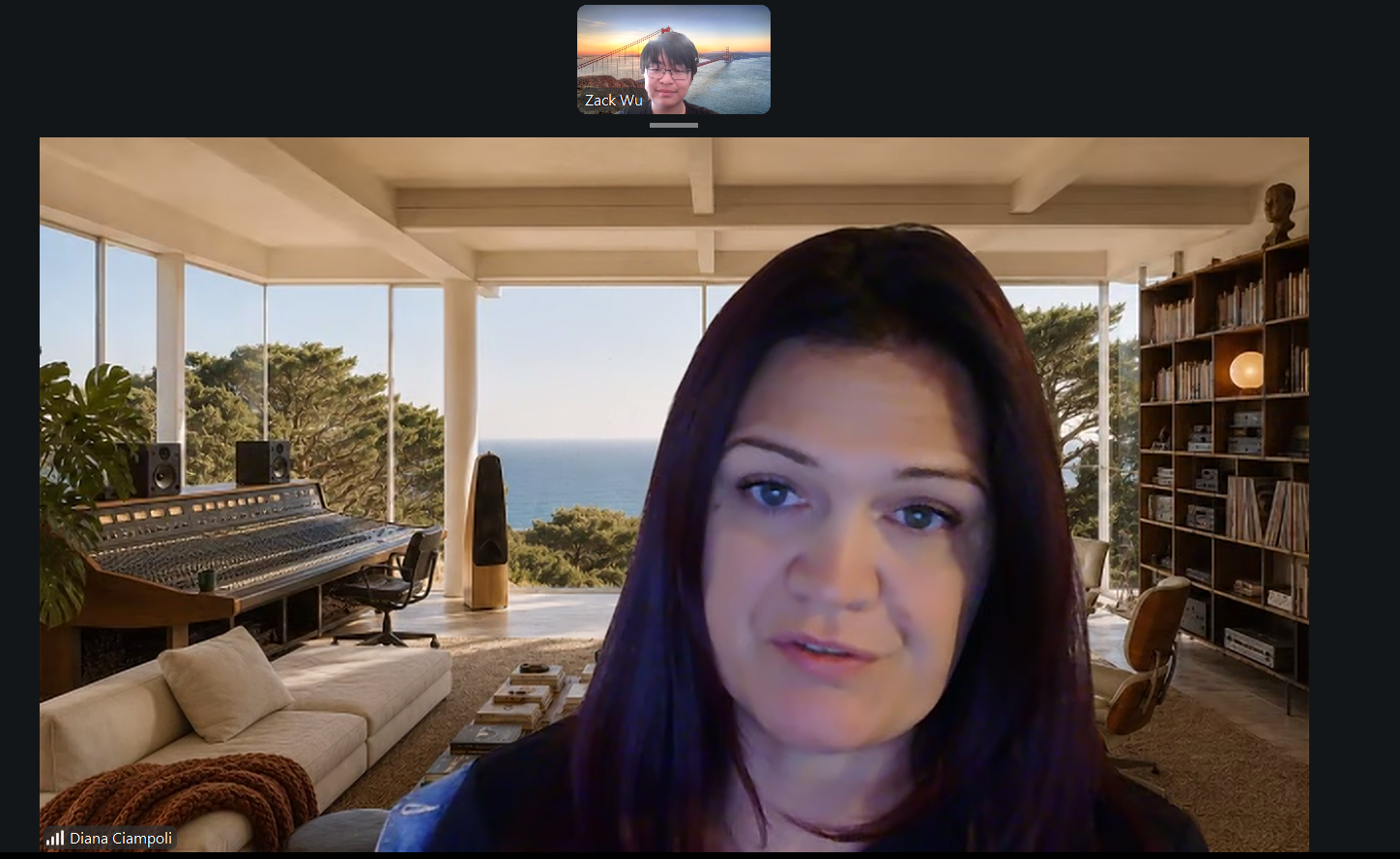
A Photo of Interview with Diana Ciampoli
Diana sees a gap between knowing financial vocabulary and understanding how money decisions affect daily life. Teenagers may recognize terms such as saving and investing without seeing how recurring purchases, credit card use, or overlooked bank fees can add up over time.
Another concern is the ability to evaluate financial content online. Social media gives students access to investment ideas and promises of quick wealth, but Diana cautioned that young people may lack the foundation to assess whether that information is trustworthy or risky.
For that reason, she places particular importance on tracking spending.
Even a basic spreadsheet or budgeting app, she explained, can help students understand their cash flow and recognize patterns. Seeing where money goes gives them a starting point for changing habits and making more informed choices.
“Once a person builds this habit, every other financial skill becomes easier,” she said.
When teaching younger audiences, Diana begins with situations they already encounter: earning money from a part-time job, paying for subscriptions, saving for something they want, or managing a first bank account.
Adults can often connect financial lessons to past experiences, including mistakes. Teenagers may not yet have those experiences to draw on. Diana therefore favors stories, simulations, and activities that allow students to apply an idea directly.
“My goal is to make financial concepts feel more practical instead of an abstract math problem,” she explained.
Relevance also matters when encouraging students to participate. Financial education competes with schoolwork, sports, jobs, and family responsibilities. Some students may assume that the subject is too complicated or only useful for adults and wealthy people.
Diana’s approach is to show how financial knowledge can help with a decision students are facing now. At SOFA, she said, this includes using familiar examples and building concepts step by step without assuming prior knowledge. Early successes can help students become more comfortable asking questions and continuing to learn.
Financial decisions also involve emotions and expectations.
Diana identified present bias, or favoring an immediate reward over a future benefit, as a common obstacle to saving. Putting money aside can feel like giving something up today for a goal that seems distant.
She also discussed optimism bias: the belief that future earnings or circumstances will make current financial problems easier to handle. That expectation, she explained, can lead young people to underestimate the consequences of overspending or debt.
To reduce the need to make the same saving decision repeatedly, Diana suggested automatic transfers. In her view, automation can turn saving into a routine and reduce the temptation to spend money intended for a future goal.
When discussing anxiety about investment losses, she encouraged students to take a longer view rather than judge their progress by daily market movements. Her emphasis was on consistent habits and long-term goals.
Diana also addressed “mental accounting,” in which people treat money differently depending on its source. A paycheck, a gift, and a refund may feel different, but she encouraged students to consider them within one overall budget. The source of the money should not determine whether it deserves thoughtful planning.
Asked about social media pressure and the fear of missing out, Diana offered a simple rule: “Pause before acting.”
She recommended waiting 24 to 48 hours before making a decision prompted by an online financial trend. During that time, students can examine the evidence behind the claim and consider the risks.
She suggested one particularly useful question: “Would you still do this if nobody was talking about it?”
The question asks students to separate their own reasons from the excitement surrounding a trend.
Diana described online misinformation as a major challenge for financial educators. Students may encounter risky investments, unrealistic business proposals, or scams presented as opportunities. Teaching them to assess sources and recognize warning signs is therefore an essential part of financial education.
The interview also explored financial education among Asian American and Pacific Islander youth.
Diana noted that an emphasis on education, stability, and long-term planning can provide a strong foundation. She also observed that expectations around traditional career paths may create pressure for students with different interests. In some households, limited discussion of money can leave young people with fewer opportunities to learn.
She recommended connecting financial education to shared family goals. Learning to manage money can help students contribute to family stability and plan for the future.
For outreach, Diana suggested working with schools, cultural organizations, community centers, and trusted community leaders. Programs that include both parents and students can create space for conversations that might not otherwise happen at home.
During the interview, Zack shared challenges facing FTFPP, his student-led financial literacy and business exploration initiative, including encouraging participation and organizing events.
Diana advised starting with a smaller group and developing a program that serves those students well.
“Focus on depth more than breadth,” she said.
Before expanding, she recommended gathering results, participant feedback, and data that help demonstrate the program’s impact. She also emphasized training future student leaders so that the work can continue beyond its current organizers.
For partnerships with established organizations, Diana encouraged students to explain what they can contribute. A youth-led initiative may help an organization connect with younger audiences, understand community needs, or meet educational goals. Making that contribution clear gives both sides a reason to work together.
Looking ahead, Diana expects financial education to address more questions involving digital payments, artificial intelligence, online scams, data privacy, and nontraditional careers.
As those topics evolve, she believes students will need the ability to evaluate unfamiliar situations and adapt their decisions.
Her closing advice to young financial literacy advocates was direct: “Never stop learning and never stop teaching.”
For Diana, effective teaching depends on making complex ideas understandable and useful. She encouraged students to develop their communication skills, listen with empathy, and pay attention to the difference their work makes in their communities.
请留下您的电子邮箱和请求,我们会尽快回复。
